Hello, I’m Chris Fenaroli, MFT
I am most interested in helping you move your trauma to transformation. I combine IFS parts work with aspects of positive psychology and quantum physics
to lead you on this path.
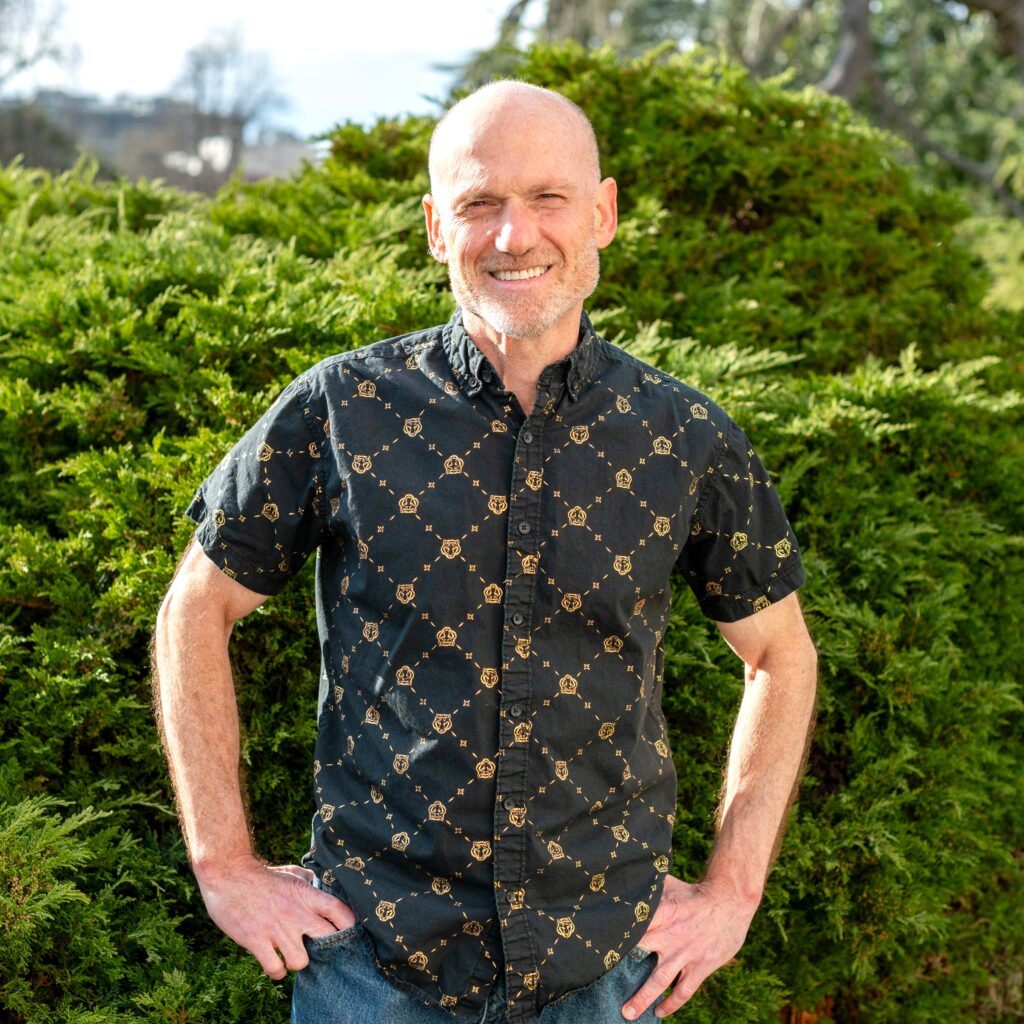
What I do in my practice
Internal Family Systems is a therapeutic approach that involves working with parts or subpersonalities within us. These parts are autonomous until we make a connection with them, and then we can begin to work with them.
An example of a part would be an 8-year-old part. At the age of 8, a young boy experiences trauma with his father. His father hits him, or yells at him, or some combination of the two. In that moment, the boy looks to his mother for support, and the mother, because of her own unprocessed trauma around men, is unable to show up for the boy, advocate for him, or protect him. Now, this 8-year-old boy is going to experience an attachment break in those relationships. Chances are, this feeling of emotional abandonment is not new to the boy, but it certainly escalates in that moment.
So, we’ve got an 8-year-old part that feels separate, alone, and anxious and is repressing anger, rage, and sadness directed towards both parents. As a therapist, I help a client dialogue directly with this “exiled” part to unburden this trauma and help that boy part to reclaim his feelings and his body. Hence, the adult client reclaims his feelings and body from that situation.
Now, other parts would be created by the infinitely creative psyche to protect that “exiled” part. The 8-year-old boy may develop a “protector” part that chides the boy for feeling the intense feelings that the trauma brought up. The 8-year-old boy may create a part that overeats, called a “firefighter” part, that acts as a safety valve for the intense feelings that the boy is repressing. As a therapist, I help my clients be present for and navigate all of these parts, creating loving and working relationships with these aspects of themselves. In this way, symptoms often resolve.
It’s a process, and it does take courage. This is not traditional talk therapy, and it means feeling uncomfortable emotions in sessions and sometimes outside of sessions. My job is to help you with all of that and make the process smoother and easier for you.

Let’s Discuss What Works for You
The first step is to identify an issue that is top of the day for a client. This is the anger someone may be experiencing within a relationship. My first step would be to have my client focus on how this anger shows up in their body. For example, it may manifest as a rapid heartbeat and tightness in the chest and abdomen.
The next step would be to have my client focus on those emotions and sensations and answer the question, “How do you feel towards this part of you that feels angry”?
This question helps clients to see the system’s objections to their feelings. In IFS therapy, these are known as protectors. Examples could be, “I don’t like this anger. Anger has never worked for me. It always gets me into trouble.”
At this point, I will ask my client if the protector part, which objects to your anger, is willing to take a step back, so that we can explore the anger.
“Until you make the unconscious conscious, it will direct your life and you will call it fate.”
— carl jung
Working with Multiple Modalities Assists in Developing a Plan for You
I have experience and training in Projective Dream Work, as taught and created by Jeremy Taylor. I was part of projective dream work groups for over ten years, both as participant and leader.
I hold a Mindfulness Certificate for teaching teens/children through the Marin Mindfulness Institute. These skills transfer nicely to work with Adults. Additionally, my graduate program focused on depth psychology and the work of Carl Jung. I consider Jungian psychology a broad and helpful lens through which to understand the human mind.

“Our beliefs control our bodies, our minds, and thus our lives.”
— bruce lipton

The Chris Fenaroli Blog
Stay current by reading my Blog posts about relevant subjects to my therapy practice and self-improvement in general.
IFS Creates Conscious Awareness
I was first introduced to IFS through a Byron Katie Retreat, where I met my therapist. I was wanting some help with inner child…
What are those Roman and Greek Myths pointing to anyway?
Most of us learn Greek and Roman mythology at some point in our schooling. Modern-day therapists of my generation are aware that Carl Jung…
Continue Reading What are those Roman and Greek Myths pointing to anyway?
Marking New Territory
Sometimes in therapy things come into focus, and we know we’ve made a comprehensive leap in our understanding. This could be in relationship to…
 Follow this link to complete my contact form.